 |
| Istanbul |
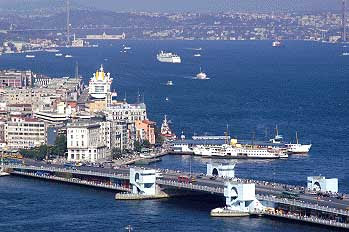
Istanbul is the largest city in Turkey, constituting the country's economic, cultural, and historical heart. With a population of 13.5 million, the city forms one of the largest urban agglomerations in Europe and is among the largest cities in the world by population within city limits. Istanbul's vast area of 5,343 square kilometers (2,063 sq mi) is coterminous with Istanbul Province, of which the city is the administrative capital. Istanbul is a transcontinental city, straddling the Bosphorus—one of the world's busiest waterways—in northwestern Turkey, between the Sea of Marmara and the Black Sea. Its commercial and historical center lies in Europe, while a third of its population lives in Asia.
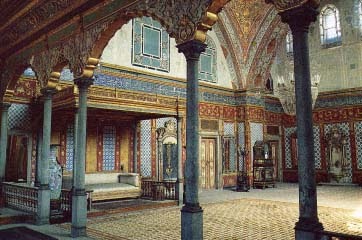
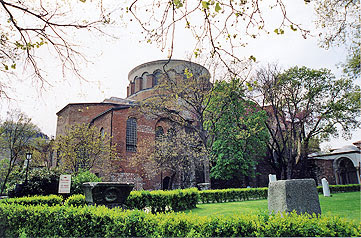
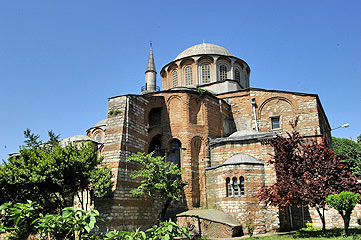
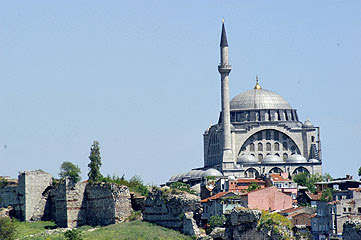
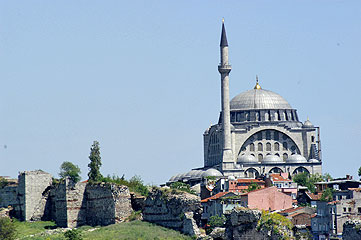
Founded on the Sarayburnu promontory around 660 BC as Byzantium, the city now known as Istanbul developed to become one of the most significant cities in history. For nearly sixteen centuries following its reestablishment as Constantinople in 330 AD, it served as the capital of four empires: the Roman Empire (330–395), the Byzantine Empire (395–1204 and 1261–1453), the Latin Empire (1204–1261), and the Ottoman Empire (1453–1922). It was instrumental in the advancement of Christianity during Roman and Byzantine times, before the Ottomans conquered the city in 1453 and transformed it into an Islamic stronghold and the seat of the last caliphate. Although the Republic of Turkey established its capital in Ankara, palaces and imperial mosques still line Istanbul's hills as visible reminders of the city's previous central role.
 |
| Istanbul |
Istanbul's strategic position along the historic Silk Road, rail networks to Europe and the Middle East, and the only sea route between the Black Sea and the Mediterranean have helped foster an eclectic populace, although less so since the establishment of the Republic in 1923. Overlooked for the new capital during the interwar period, the city has since regained much of its prominence. The population of the city has increased tenfold since the 1950s, as migrants from across Anatolia have flocked to the metropolis and city limits have expanded to accommodate them. Arts festivals were established at the end of the 20th century, while infrastructure improvements have produced a complex transportation network.
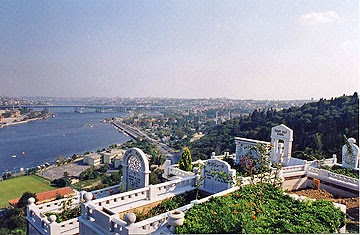
Seven million foreign visitors arrived in Istanbul in 2010, when it was named a European Capital of Culture, making the city the world's tenth-most-popular tourist destination. The city's biggest draw remains its historic center, partially listed as a UNESCO World Heritage Site, but its cultural and entertainment hub can be found across the city's natural harbor, the Golden Horn, in the Beyoğlu district. Considered a global city, Istanbul hosts the headquarters of many Turkish companies and media outlets and accounts for more than a quarter of the country's gross domestic product. Hoping to capitalize on its revitalization and rapid expansion, Istanbul is currently bidding for the 2020 Summer Olympics.
Source: wikipedia
 |
| Istanbul |
 |
| Istanbul |
 |
| Istanbul |
 |
| Istanbul |
 |
| Istanbul |
 |
| Istanbul |
 |
| Istanbul |
 |
| Istanbul |
 |
| Istanbul |
 |
| Istanbul |
 |
| Istanbul |
 |
| Istanbul |
 |
| Istanbul |
 |
| Istanbul |
 |
| Istanbul |
 |
| Istanbul |
 |
| Istanbul |
 |
| Istanbul |
 |
| Istanbul |
 |
| Istanbul |
 |
| Istanbul |
 |
| Istanbul |
 |
| Istanbul |
 |
| Istanbul |
 |
| Istanbul |
 |
| Istanbul |
 |
| Istanbul |
 |
| Istanbul |
 |
| Istanbul |
 |
| Istanbul |
 |
| Istanbul |
 |
| Istanbul |
 |
| Istanbul |
 |
| Istanbul |
 |
| Istanbul |
 |
| Istanbul |
 |
| Istanbul |
 |
| Istanbul |
 |
| Istanbul |
 |
| Istanbul |
 |
| Istanbul |
 |
| Istanbul |
 |
| Istanbul |
 |
| Istanbul |
 |
| Istanbul |
 |
| Istanbul |
 |
| Istanbul |
 |
| Istanbul |
 |
| Istanbul |
 |
| Istanbul |
 |
| Istanbul |
 |
| Istanbul |
 |
| Istanbul |
 |
| Istanbul |
 |
| Istanbul |
 |
| Istanbul |
 |
| Istanbul |
 |
| Istanbul |
 |
| Istanbul |
 |
| Istanbul |
 |
| Istanbul |
 |
| Istanbul |
 |
| Istanbul |
 |
| Istanbul |
 |
| Istanbul |
 |
| Istanbul |
 |
| Istanbul |
 |
| Istanbul |
 |
| Istanbul |
 |
| Istanbul |
 |
| Istanbul |
 |
| Istanbul |
 |
| Istanbul |
 |
| Istanbul |
 |
| Istanbul |
 |
| Istanbul |
 |
| Istanbul |
 |
| Istanbul |
 |
| Istanbul |
 |
| Istanbul |
 |
| Istanbul |
 |
| Istanbul |
 |
| Istanbul |
 |
| Istanbul |
 |
| Istanbul |
 |
| Istanbul |
 |
| Istanbul |
 |
| Istanbul |
 |
| Istanbul |
 |
| Istanbul |
 |
| Istanbul |
 |
| Istanbul |
 |
| Istanbul |
 |
| Istanbul |
 |
| Istanbul |
 |
| Istanbul |
 |
| Istanbul |
 |
| Istanbul |
 |
| Istanbul |
 |
| Istanbul |
 |
| Istanbul |
 |
| Istanbul |
 |
| Istanbul |
 |
| Istanbul |
 |
| Istanbul |
 |
| Istanbul |
 |
| Istanbul |
 |
| Istanbul |
 |
| Istanbul |
 |
| Istanbul |
 |
| Istanbul |
 |
| Istanbul |
 |
| Istanbul |
 |
| Istanbul |
 |
| Istanbul |
 |
| Istanbul |
 |
| Istanbul |
 |
| Istanbul |
 |
| Istanbul |
 |
| Istanbul |
 |
| Istanbul |
 |
| Istanbul |
 |
| Istanbul |
 |
| Istanbul |
 |
| Istanbul |
 |
| Istanbul |
 |
| Istanbul |
 |
| Istanbul |
 |
| Istanbul |
 |
| Istanbul |
 |
| Istanbul |
 |
| Istanbul |
 |
| Istanbul |
 |
| Istanbul |
 |
| Istanbul |
 |
| Istanbul |
 |
| Istanbul |
 |
| Istanbul |
 |
| Istanbul |
 |
| Istanbul |
 |
| Istanbul |
 |
| Istanbul |
 |
| Istanbul |
 |
| Istanbul |
 |
| Istanbul |
 |
| Istanbul |
 |
| Istanbul |
 |
| Istanbul |
 |
| Istanbul |
 |
| Istanbul |
 |
| Istanbul |
 |
| Istanbul |
 |
| Istanbul |
 |
| Istanbul |
 |
| Istanbul |
 |
| Bodrum |
 |
| Bodrum |
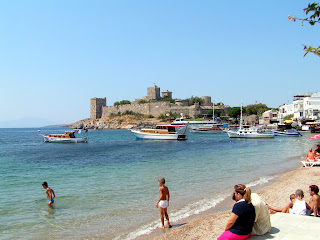
According to the famous traveler-historian-philosopher Herodotus*, ancient Halicarnassus was founded in an area called Caria by Dorians who mixed with the native populations called Lelegians and Carians. With Cnidus, Cos on the island of the same name, Camirus, Lalysus and Lindus on Rhodes Island, Halicarnassus belonged to the Dorian confederacy. In the middle of the 6C BC, Halicarnassus came under Persian domination but was ruled through native tyrants (the first one was Lygdamos) centered in Mylasa. His daughter, Queen Artemisia I, backed Xerxes during his expedition against Greece but they were defeated in the Salamis Naval Battle (480 BC) and as a result, Halicarnassus came under the domination of the Athenians. In 386 BC, following a peace agreement, Caria came again under Persian control and was put under the administration of an old Carian dynasty, who lived in Mylasa. Hecatomanus, who ruled with the Persian title of satrap, had three sons, Mausolus, Idrieus and Pixodarus, and two daughters, Artemisia II and Ada. After his father's death in 377 BC, satrap Mausolus transfered the capital of Caria to Halicarnassus. When Mausolus became so powerful that he regained his title of king and achieved a virtual independence, the city enjoyed its greatest prosperity. In 353 BC, upon his death, his sister and wife queen Artemisia II who was famous for her naval victory over the Rhodians, erected a monument to her husband's memory, the Mausoleum, which was one of the Seven Wonders of the World. Upon the death of Idrieus, his sister and wife Ada ruled until Pixodarus, a faithful ally of the Persians, sent her to exile in Alinda. In 334 BC when Alexander the Great seized the city helped by Ada, the latter was restored on the throne. Halicarnassus was successively incorporated to the Roman, Byzantine and Seljuk Empires, to the Turkish Mentese Emirate and to the Ottoman Empire under Bayezit I. In 1404 Halicarnassus, now called Bodrum by the Turks, was seized by the Knights of Rhodes who built the St Peter Castle. In 1523 Süleyman the Magnificent expelled the Knights from Bodrum and later from Rhodes.
 |
| Bodrum |
 |
| Bodrum |
 |
| Bodrum |
 |
| Bodrum |
 |
| Bodrum |
 |
| Bodrum |
.jpg "Bodrum") |
| Bodrum |




.jpg "Bodrum")